7 min read · Updated
How custom plush toys are made: process, timeline and cost
A custom plush toy usually takes 6–10 weeks from first sketch to finished cartons: about 2 weeks for sampling, 1–2 weeks for revisions, 4–6 weeks for production and testing. Here is what happens at each stage and how to keep your project on schedule.
1. Artwork and briefing
Everything starts with a clear brief. The ideal package is a front, side and back view of the character, the target height, the quantity and the market where the toy will be sold. A single drawing is enough to start, but extra views reduce guesswork and revision rounds.
Tell your manufacturer early about anything that affects safety or cost: will it be sold to babies under 3, does it need a sound module, does it carry a licensed logo?
2. Pattern making
A pattern maker translates your 2D drawing into flat paper pieces that, when sewn and stuffed, form a 3D shape. This is the most skilled step in plush manufacturing. Rounded cheeks, a recognisable silhouette and a stable sitting pose all come from the pattern.
At the same time, the factory selects fabrics and prepares embroidery files for the eyes, mouth and logos.
3. Prototype sample (7–15 days)
The first sample is cut and sewn by hand. A good factory photographs it next to your artwork so differences are easy to spot. Expect one or two revision rounds — adjusting the ear angle, embroidery size or colour is normal.
Once approved, this becomes the golden sample: the reference for every piece in mass production. Keep one signed copy yourself.
4. Mass production (25–40 days)
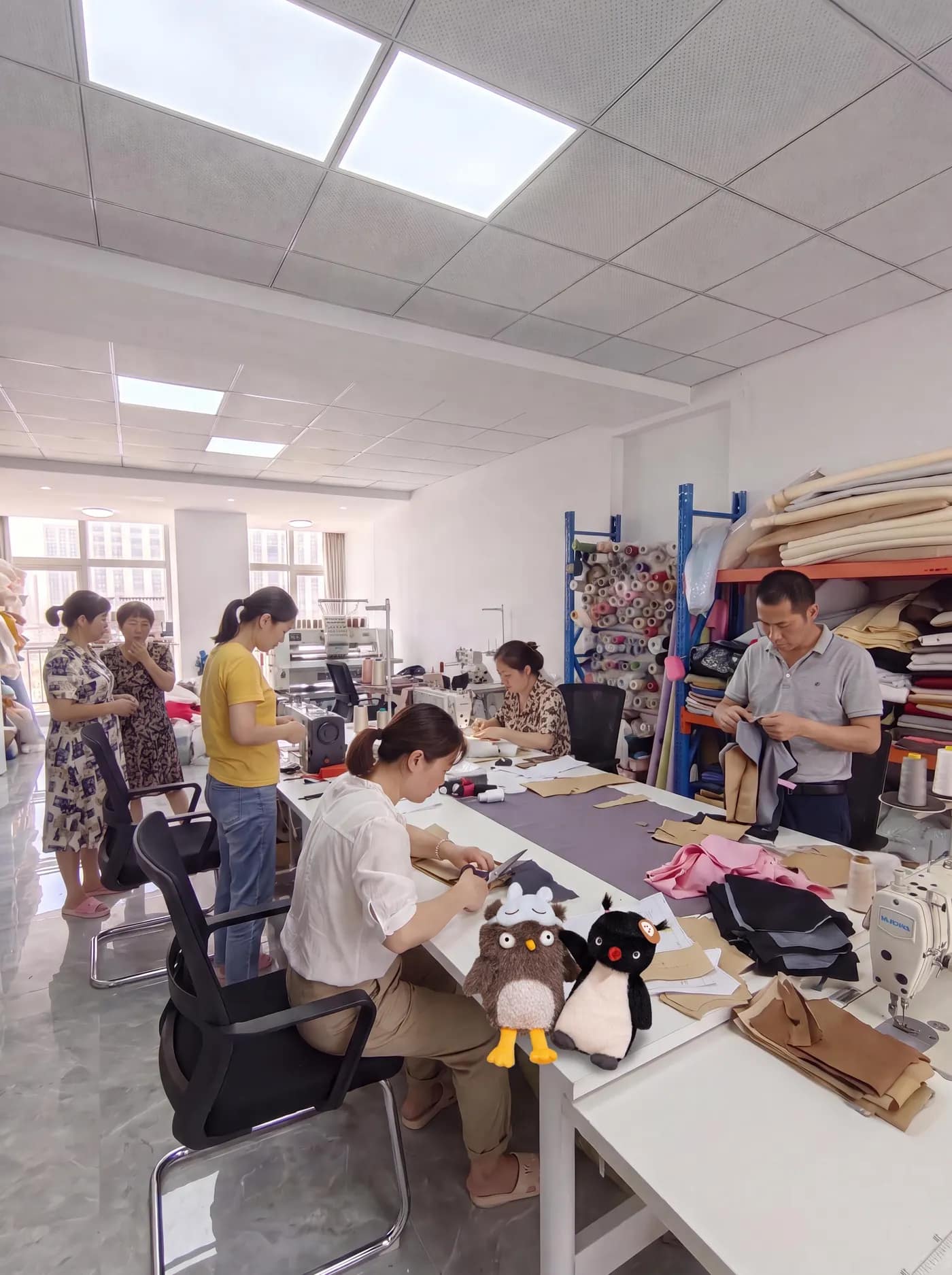
Bulk production runs through fabric cutting (by die or laser), embroidery, sewing, turning, stuffing, closing and hand finishing. Inline inspectors check seams, stuffing weight and embroidery while the order is being sewn.
Before packing, every toy passes a needle detector and a final AQL inspection.
5. Testing, packing and shipping
Safety tests such as EN71 or ASTM F963 take 5–7 working days at an accredited lab and can run in parallel with the last stage of production. Then the goods are packed in OPP bags, boxes or displays and shipped by sea, air, rail or express.
What drives the price of a custom plush toy?
Four things dominate the unit price: size, the number of pattern pieces and embroidery stitches, the fabric type and the order quantity. A 20 cm plush in short-pile minky with embroidered eyes is far cheaper than the same size in long-pile faux fur with clothes and accessories.
Quantity matters because pattern making, sampling and set-up are fixed costs. Moving from 100 to 1,000 pieces typically lowers the unit price significantly.
Tips to keep your project on time
Approve samples quickly and in one consolidated round of comments. Book seasonal products early: factories in Dongguan are busiest from June to October. And confirm testing requirements before the golden sample, because changing materials later restarts the clock.